Equity, Diversity, Inclusion, Belonging, and Justice
The Family-Centered Care (FCC) Taskforce affirms and advocates for the principles of equity, diversity, inclusion, belonging, and justice (EDIBJ) as foundational to high-quality, compassionate, and just neonatal care.
We believe that every family in the neonatal intensive care unit (NICU) deserves care that honors their identity, recognizes their individual needs, and promotes trust, healing, and resilience.
BACKGROUND
Having an infant in the NICU is universally traumatic, exhausting, and emotionally taxing. However, for families that have been intentionally and historically marginalized, this experience is often compounded by systemic inequities (i.e., racism, classism, misogyny, etc.), bias, and cultural disconnects.
When families do not see themselves represented among the medical team caring for their baby, it can create mistrust, fear, and a sense of alienation—emotions that hinder the foundation of family-centered care.
Disparities based on race, gender identity, language, family composition, socioeconomic status, and other dimensions of identity can lead to additional harm.
Families who feel unseen, unvalued, and/or misunderstood often experience isolation, defensiveness, and exhaustion.
At this critical moment in time—when identities are being denied, families are being divided, and inclusion is under threat—the neonatal community must rise to protect our most vulnerable patients and their families.
The FCC Taskforce therefore reaffirms its unwavering commitment to equity, diversity, inclusion, belonging, and justice in all aspects of NICU care, culture, and education.
______________________________________
We encourage you to read and share this information with your team and explore how your unit can mitigate harm for marginalized families.
EDIBJ COMMITTEE CO-CHAIRS:
- Jessi Barnes, MSN, RN, RNC-NIC, NPD-BC, C-ELBW
- Mia Malcolm, BS, CDFT


EQUITY
Equity means providing individuals and families with what they need to achieve optimal outcomes—not necessarily providing the same resources or support to everyone. Equality assumes sameness; equity recognizes difference.
Just as precision medicine tailors treatments to each patient’s biological needs, family-centered care must respond to each family’s social, cultural, and emotional needs. True fairness emerges not from identical treatment, but from intentional and individualized support. By identifying and addressing systemic inequities, we can begin to level the playing field for all NICU families. Each family’s journey is unique, and our care must reflect that truth.
Ultimately, family-centered care is rooted in centering the individual needs of each family and providing culturally conscious, concordant care that allows families to achieve the best possible outcomes for their infants.
The figure below uses a street-crossing analogy to illustrate the difference between equality and equity.
In the NICU, this same concept applies to many care practices, such as safe sleep, that are often taught and discussed in a strict binary way (i.e., right or wrong). This approach of either/or framing takes away our ability to see the fullness of a family’s experience—their abilities, capabilities, beliefs, cultural practices, fears, community/familial norms—rendering equity impossible.
Instead of leading with a false dilemma (the idea that only two options exist) or a limiting assumption, such as, “To keep your baby safe, it’s important that your baby sleep alone, on their back, and in a crib,” an equity-centered approach begins with humble inquiry: “Tell me about your plans for where your baby will sleep once you get home.” This gives clinicians insight into the family’s experience so they can individualize care and leverage resources to make safe sleep goals achievable. Simply checking off the ABCs of safe sleep or providing a static handout does not address what may be needed to establish a safe sleeping environment for their baby.
Equity-centered care means doing the work to make a path for all families to achieve better outcomes.
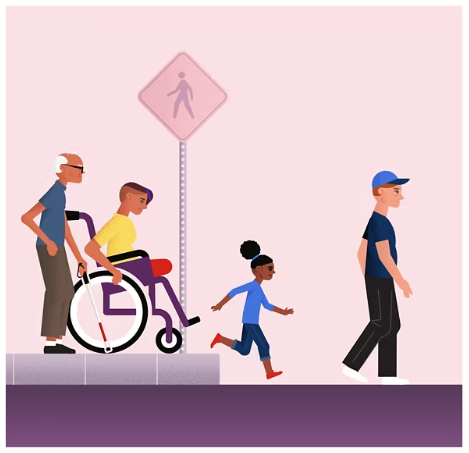
EQUALITY: Everyone gets the same – regardless of whether it’s needed or right for them.
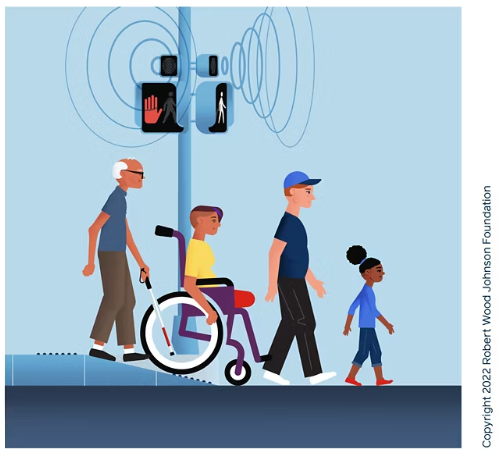
EQUITY: Everyone gets what they need – understanding the barriers, circumstances, and conditions.
DIVERSITY
Diversity fully acknowledges people by honoring all of what makes them unique—age, gender, ethnicity, religion, ability, sexual orientation, education, national origin, language, race, income, access, and other dimensions of identity.
Every family deserves access to care that is free from bias, discrimination, and fear-based practices. In the NICU, diversity also encompasses family structure and community, which often looks different than expected. Each family arrives with a distinct set of strengths and challenges regardless of their makeup.
Providing individualized, equitable care means recognizing and responding to those differences with humility and respect.
The goals of diversity include fostering creativity and innovation, strengthening decision-making, and building a more just and empathetic community.
The FCC Taskforce is committed to supporting each family in the NICU through individualized, inclusive practices that value every voice—birthing and non-birthing parents, bereaved parents, and extended family members—regardless of the infant’s gestational age, medical complexities, and outcomes.
Having a diverse interdisciplinary team—clinicians, therapists (respiratory, physical, speech, occupational, etc.), and mental health professionals—increases collaboration with the families we serve.
INCLUSION
Inclusion is the intentional and purposeful involvement of families, acknowledging and respecting their inherent worth and dignity. Inclusion is not merely the consideration of families in the decision-making process — it is integrating them in ways that are meaningful to them. Inclusion begins with asking and honoring families’ preferences:
- Names and relationships: Ask caregivers what they wish to be called (e.g., first name, “Mom,” “Dad,” “Granny,” “Pops”) and document that preference in visible and consistent ways, such as at the baby’s bedside or in the medical records.
- The infant’s name: Use the infant’s given name. This simple act recognizes the infant’s humanity and facilitates socialization of the infant as a part of their family, community, and culture.
An inclusive NICU culture values and respects the beliefs, talents, and lived experiences of all who enter.
Inclusion also requires breaking down hierarchical barriers within medicine—fostering respect and collaboration among all team members. Everyone, regardless of role or title, brings essential value to the care of NICU families.
BELONGING
Belonging fosters safety, support, and acceptance which allows individuals and families to show up authentically—without fear of judgment or exclusion.
In the NICU, belonging must be intentionally cultivated in every aspect of care: policies, language, artwork, signage, staff behavior, and family access.
Belonging cannot simply be declared (“You belong because we told you so”); it must be demonstrated through inclusion in decisions and practices like family-centered rounds and proactive and intentional care conferences.
Every unit should create mechanisms to facilitate belonging.
For current NICU families, this may look like equity-centered, trauma-informed support from mental health professionals, social workers, and NICU-specific lactation consultants. For graduate NICU families, belonging is promoted through family partnership councils and peer support programs that provide meaningful compensation, agency, and influence in decision-making.
The FCC Taskforce operates under the All-In Meeting Guidelines as developed by NEC Society which exemplify belonging in action:
- First names are used to break down the hierarchy by ensuring everyone is empowered to contribute, listen, and be heard
- Every committee is co-led by a NICU parent and a NICU professional
- Each event or webinar honors a baby and family who experienced the NICU
- Family partners are financially supported and empowered
- Voices of underrepresented groups are amplified
- Feedback is shared with empathy, transparency, and grace
These practices promote belonging that is not performative or symbolic—it is transformational and systemic.
JUSTICE
Justice, as a core principle of family-centered care, focuses on the dismantling of systemic, oppressive barriers that impact fairness and equitable outcomes for families.
Oppressive systems—i.e., racism, sexism, classism, ageism, etc.—intentionally exploit, marginalize, promote powerlessness, and enact cultural imperialism and violence upon their recipients. Justice actively works to dismantle these systems to create more equitable access to resources and opportunities.
It examines and addresses behavior, policies, and procedures to ensure fair and human-centered practices so that families can live full and dignified lives.
Justice is equity in action.
Justice works to address oppression, discrimination, and inequities in three ways:
- policy and procedure solutions
- community and individual engagement and action
- systemic and structural overhaul
Policy and procedural solutions entail looking into both current and longstanding policies in place in the unit, using an equity lens to highlight inequities, and enforcing anti-discrimination frameworks to create a policy that promotes substantive equity so that families have access to resources that promote healing by and large. (See Figure 2.)
The creation of independent, community run oversight entities—like Family Partnership Councils (also referred to as Family Advisory Councils)—is how you ensure that policies and systems have diverse perspectives baked into them and minimize bias and harm to families and staff.
Justice requires systemic and structural changes that redirect training, education, communication, and behaviors from punitive to transformative.
Awareness around trauma, bias, identities, and systems of oppression is the first step to more just, equitable, and inclusive spaces for families to thrive.
How to use an equity lens—when creating or reviewing a policy, procedure, recommendation, guidelines, signage, etc.
Reflect on these three questions:
- Who does this policy, procedure, or recommendation benefit?
- Does this policy, procedure, or recommendation differently impact historically marginalized families?
- What is missing from this policy, procedure, or recommendation that will decrease or eliminate disparities?
If the answer to the first question is not “everyone,” or if the answer to the second question is “yes,” you are morally obligated to dismantle that practice.
Justice then requires that you work with the community to reconstruct it for more equitable outcomes for families.
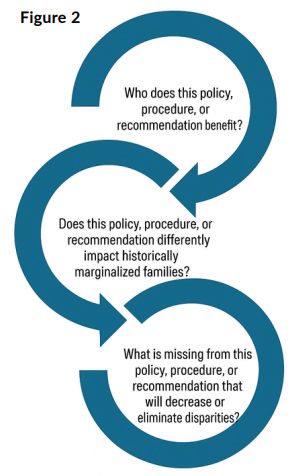
Source: Forward Through Ferguson, Ferguson Commission Report
OUR MESSAGE for OUR COMMUNITY
Every family in the NICU is owed dignity, respect, and individualized care.
Upholding the principles of equity, diversity, inclusion, belonging, and justice provides a framework for creating environments where all families can participate, heal, and thrive.
When we meet families where they are—honoring who they are—we promote better outcomes for infants. This perspective shift also builds resilience and trust and reaffirms shared humanity in the face of trauma.
The Family-Centered Care Taskforce stands committed to ensuring that every family feels seen, heard, valued, and supported in every NICU.